History
The Vlieland was a small yacht of the VOC. The ship left for Asia on October 12th, 1627. The war yacht did not sink or perish. On the list of the Dutch naval force in Asia (of 16-12-1633) it is still mentioned (see references). In the end, it was demolished on the roads of Batavia at the end of her economic life.
The fleet of the autumn of 1627 (the so-called kermisvloot, named after the yearly Amsterdam fair during which it usually left) consisted of the ships Delfshaven, Kampen, Vliegende Draak, Kemphaan, Nassau, Ter Veere, Vlieland, Terschelling, Vlissingen, Wieringen, Prins Willem and Zeeburg.
After arriving in Asia, the ships Vlieland, Terschelling, Vlissingen and Kemphaan had as their destination Paliacatta (Pulicat) on the Coromandel coast (the southeastern coast of India).
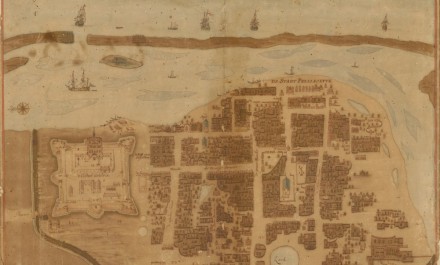
View the map in more detail on The Global Eye.
The VOC had a fortress called Geldria there since 1610, which was their most important trade post in India.*
The Vlieland arrived on the roads of Pulicat on June 10th, 1628. She was stationed on the Coromandel Coast. On April 24th, the two yachts Terschelling and Vlieland were cruising before the Portuguese settlement at Negapatnam (Nagapattinam).
The Terschelling was attacked by five Portuguese fusta's (a type of frigate) when she had gotten out of sight of the Vlieland and was lost.
This fate also befell the Vlieland later but she managed to escape. On the roads near Pulicat a new fight ensued with this Portuguese armada in September 1630. The Vlieland had gone alongside the Portuguese admiral. They were preparing to board, yet at that moment the ship exploded with much violence. On board of the Vlieland there also were 18 dead and 20 wounded. The Vlieland was heavily damaged but stayed afloat.
*Pulicat was the centre of the textile production and trade in textiles. The textiles for clothing from India were very popular in the Moluccas and were traded for pepper and other spices by the VOC. They were also traded with the WIC who used them to by enslaved people in Africa.
Description
Yard: the ship was probably built in Amsterdam for the Amsterdam Chamber
Tonnage: 40 last
| Tonnage | 80 ton (40 last) |
|---|
References
- Stadsarchief Amsterdam, 5075
ref. no. 726, pp 543 - Nationaal Archief, Den Haag, VOC
ref. no. 1.04.02, 4932, pp 8 - Atlas of mutual heritage
- Nationaal Archief, Den Haag, VOC
ref. no. 1.04.02, 7345, pp 18v