History
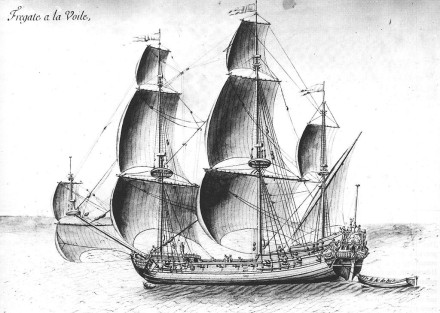
The Valk was a frigate of the Dutch Batavian Navy. The ship was commissioned on Mach 5th, 1774. When the ship was lost in 1799, it had had a long period of service: amongst other things missions in the Mediterranean, the Caribbean area, Asia and the North Sea.
From the Batavian Navy to the Oranges
In 1797 the ship - then part of the North Sea squadron of the Batavian Navy - surrendered without a fight to the British near the island of Texel. The Valk was one of the five Batavian frigates that fell into British hands then (together with the Hector, Heldin, Minerva and Venus).*
Prince's Squadron
The frigates were given over to the supporters of the house of Orange by the British (and thus became a part of the so-called Prince's Squadron, as part of the armed forces that had remained loyal to the house of Orange and manned with sailors, also from the Vlieter-incident. After the failure of the Anglo-Russian invasion of the Netherlands, their troops needed to leave Batavian territory. The Prince's Squadron was used to transport the English and Orangist troops to England.
Crossing
The Valk left Den Helder on October 30th, 1799 with destination England under the command of the Dutch captain Martinius. There were a total of 419 people on board, amongst whom were 265 soldiers and 37 women and children. At nightfall they were about 30 miles from Yarmouth. The captain decided to not go in yet because they had no pilot.
Adrift
In the night, the wind turned south-west and increased to a storm. The Valk was driven back to the east across the Dogger Bank and ended up west of Norway. Days later, on November 10th, the ship struck the ground. The captain thought they were stranded near Yarmouth on a sandbank. The Valk got loose again but was then smashed to pieces in the surf.
Only about 25 people survived the disaster and managed to reach the beach. Among them was the fusilier Hill who later wrote the report. It turned out that they had not ended up in Britain but on the Dutch island of Ameland. They were well received there by the orangist inhabitants. The dead were partly buried in sacred ground (see De Jonge V, p 487).
*)It was the time of the patriots. The house of Orange had fled the Netherlands and the Batavian Republic had been proclaimed. At the foundation of the Batavian Republic, the naval forces, consisting of five different Admiralty colleges, were merged and renamed 'The Committee for Matters of the Navy'.
Description
Yard: Admiralty yard, Amsterdam
| Master | Martinius |
|---|---|
| People on board | 419 |
References
- De Jonge, J.C.
Geschiedenis van Het Nederlandsche Zeewezen, V, 487
pp 487 - Leeuwarder courant 06-12-1988
Engelsmanduun