History
Slave ship
The Zong was an English frigate with a Dutch past that was involved in the slave trade. Its gruesome story sheds light on the atrocities of the transatlantic slave trade with its lust for profit and utter dehumanisation of the enslaved people.
It is not clear when it was built, but this was probably in or shortly before 1777, because in that year it appears in the archives of the Middelburgse Commercie Compagnie (MCC), a company from Zeeland in the Netherlands that was deeply involved in the slave trade. The ship was named the Zorg then. On February 10th ,1781 it was taken bay an British warship, the Alert, in the Atlantic Ocean near the African coast. It kept its name, but when this name was entered into the administration after it later arrived in Jamaica, it was changed to Zong due to a transcription error.
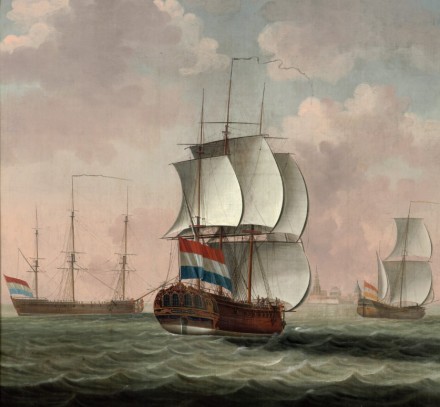
A voyage full of mistakes and bad luck
After this ship had been taken by the British, it was sold to the highest bidder in the port of Accra, including the 'cargo' of 244 enslaved people. It was sold to a group of merchants from Liverpool, one of whom was William Gregson, an investor who was involved during his lifetime with the transportation of no less then 58.201 African enslaved people to the New World.
The owners ordered the new captain, Luke Collingwood, to buy more enslaved people in Accra, to increase the profits of the voyage to America. With a total number of 442 enslaved on board, the ship left Accra. But due to all the quick changes, there were only 17 crew members on board and a single passenger, Robert Stubs, the former governor of Anomabu.
The voyage went far from well. There was dissent among the crew and the captain fell seriously ill. Because of this, the management of the ship fell into the hands of Stubbs, who was know as a drunkard and a bad leader. They made it across the Atlantic, but Stubbs omitted to land at Tobago for food and water, as was customary.
Because of a number of grave navigational mistakes, the ship sailed past its destination Jamaica and ended up on open sea again.The large amount of people on the ship and the bad state of the supplies caused diseases to spread. Because of this, seven crewmen and 62 slaves died in a short period.
Atrocity
The crew panicked out of fear for their own loves and for their profits. The enslaved people were ensured during the voyage, as was customary, but if they were to die after arrival, the insurance company would not pay. The 'cargo' was insured for an amount of 8000 pounds during the voyage, half of the total value. The insurance company was to pay 30 pounds for every enslaved person who did not survive the voyage.
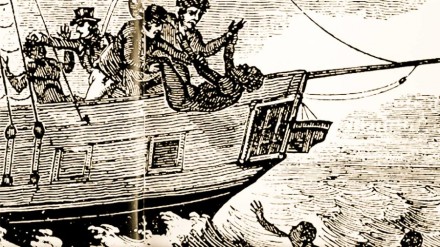
The lust for profit of the crew led to one of the most macabre accounts of insurance fraud in history. Because the enslaved people were considered to be goods, the crew reasoned that they were in their right to throw them overboard, for it was allowed under insurance rules to jettison cargo to save the ship.
On November 29th, 1781, the first 54 people were thrown overboard. It were only women and children, probably because the crew thought that these would offer the least resistance. The other enslaved people under deck heard them beg for their lives and offered to stop drinking and eating for the remainder of the voyage if the crew would stop throwing people overboard.
Yet this had no effect. On December 1st, another 42 enslaved were thrown overboard, and a few days later 36 more people. Ten of this last group panicked to such an extend that they jumped overboard out of their own account.
Court case
On December 22nd, 178q, the Zong finally arrived in Jamaica. There were only 208 enslaved people left on board, not even half of the original amount. Almost immediately after arrival, a claim was filed with the insurance company, asking compensation for all the deceased enslaved people, including the ones that had been thrown overboard. For this specific group, a claim of 4000 pounds (converted to today's value about 450.000 euros), yet this claim was denied by the insurer.
Upon this, the crew and the owners started a court case, in which they put forward that their actions had been necessary to save the ship because they had nearly run out of drinking water. This so-called General Average clause is intended to give crews the freedom to jettison (parts of the cargo), for instance during a storm, to save the ship. Research showed however that the ship still had 1900 litres of water on board upon arrival in Jamaica. Yet still the judge ruled in favour of the investors and the insurance company had to pay. A group of abolitionists (protagonists for the abolition of slavery) tried to have the crew prosecuted for murder but this also failed. Lord Mansfield, the head of the British court, declared "This is a case of ownership and goods. Blacks are goods. It would be a sign of insanity to accuse this honorable and hardworking crew of murder."
Description
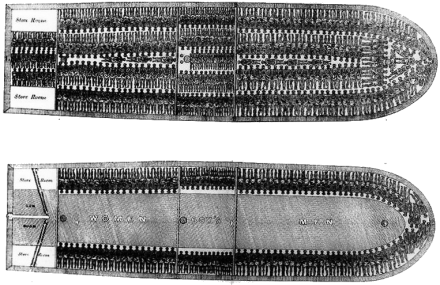
Slave ships were fitted out especially to carry large groups of people in chains under deck, under inhumane conditions.
| Master | Collingwood, Luke |
|---|---|
| People on board | 460 |
| Tonnage | 195 ton (98 last) |
Status
It is not clear what became of the ship.
References
- Zeeuws Archief
Archief MCC - IS Geschiedenis
Gruwelijke reis van het slavenschip Zong - London Museum
The Zong massacre trial - Insurance Museum
The Zong Massacre (1781) – An Insurer’s Perspective - National Archives, Kew, Records of the Board of Trade and of successor and related bodies
ref. no. BT98/42,227 - Slavevoyages.org
Slave voyages