History
The Wilde Kust was a ship in the service of the Dutch West India Company (WIC). It sailed under the command of captain Pieter Adriaansz. Ita. Pieter Ita would later become a successful WIC admiral and capture two so-called 'Honduras-sailers' (Spanish ships that transported goods from Honduras, mainly dyes).
The ship itself was named after the Wilde Kust (the 'Wild Coast'). This was an area in South America roughly encompassing Guyana, Suriname and a part of Brazil. In this area, people from the Dutch provinces Holland and Zeeland had undertaken several attempts at founding colonies since 1590. Most did not survive for long, however.
Oranje and Nassau
In 1623, the Portuguese conquistador Pedro Teixeira mounted an attack to drive the English and Dutch intruders from the Amazon area.
The forts of Oranje and Nassau (both named after the noble family of orange-Nassau) were in the mouth of the Xingu river near present-day Gurupa. The settlements were attacked in August 1623 by Teixeira. The forts surrendered and were destroyed.
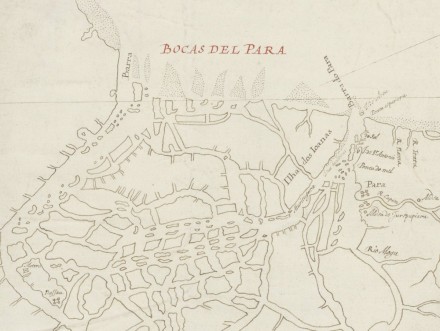
The ship the Wilde Kust was in the area and run on a sandbank before the place Okiari (the location is uncertain). The ship was set on fire and abandoned by its own crew.
On the forts of Oranje and Nassau, more can be found at the Atlas of Mutual Heritage (see references).
Description
References
- L.A.H.C. Hulsman (2009)
PhD thesis: Nederlands Amazonia : handel met indianen tussen 1580 en 1680
UvA-DARE AMsterdam
pp 103 - Atlas of Mutal Heritage
Fort Nassau - Atlas of Mutal Heritage
Fort Oranje