History
New shipwreck finds Wijk bij Duurstede
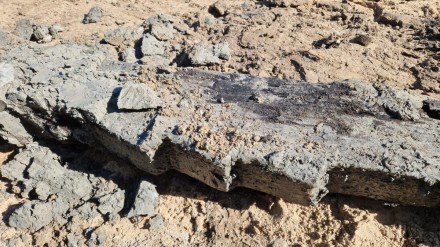
During excavation work in Wijk bij Duurstede in the Netherlands, two pieces of ship timber have been found in March 2026. A worked wooden beam was first discovered. It is probably part of a Viking ship from the eighth century.
Frame
The beam was found during excavation work for the replacement of the sewer and drainage system. The wood fragment protruded from the ground and caught attention. An amateur archaeologist was called in who immediately recognized the importance of the find. Consequently, the municipality immediately engaged professional archaeologists.
Viking ship
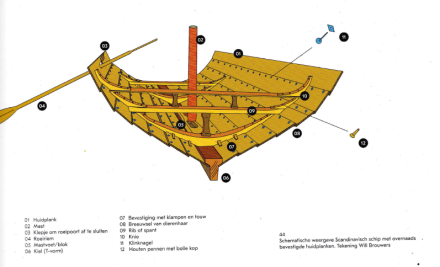
The fragment resembles a frame of a keel ship built in the Scandinavian tradition. The notches indicate a clinker-built ship. The fragment could also be repurposed ship timber. In the Middle Ages, discarded ships were recycled, as it were, into quay linings, wells, and even graves.
There are roughly two ways of attaching hull planks to the frames: clinker or carvel. The wood fragment is a frame for the clinker construction method.
Plank
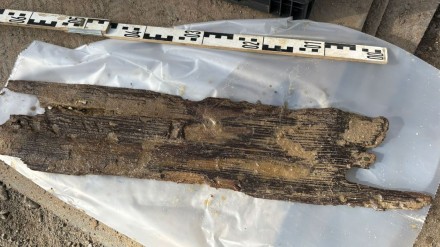
A day later, another plank was found in the same location. This could be part of a hull plank from the same ship.
Dating
Pottery from the Carolingian period was found around the beam. Based on an initial estimate (the wood combined with the pottery), the archaeologists believe the ship dates from the Carolingian period and the provisional dating is the 9th century CE.
Further research
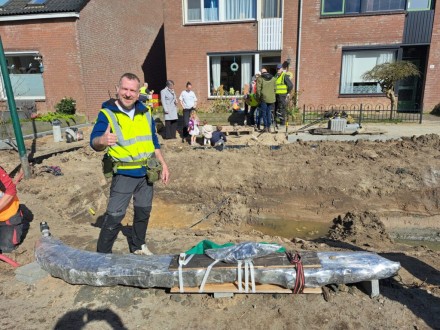
The fragment is approximately 3.20 meters long and about 30 centimeters thick. "The beam may originally have been even larger," says archaeologist Anne de Hoop of the municipality of Wijk bij Duurstede. The wood was immediately wrapped and taken to a storage facility to prevent drying out.
Further research must definitively determine the time period from which the ship originates. For instance, it has not yet been ruled out that it is a cog ship, dating from approximately 1300 AD.
Dendrochronological research
"The beam will be carefully cleaned shortly," says De Hoop. "Subsequently, the wood's annual rings, among other things, are analyzed to obtain a more accurate picture of its age and origin."
The origin of the wood is also of importance. It is quite possible that it was not a Viking ship, but a Frisian type of ship. It appears that the fragment is a little too robust for a Viking ship. So far, no remains of indigenous Frisian ships from that period have been identified. Dorestad, the forerunner of Wijk bij Duurstede, was Frisian before it became Frankish.
Dorestat 1
Between 1967 and 1977, research was conducted by the ROB (a Dutch government agency for archaeological research) in Wijk bij Duurstede.
In 1973 and 1974, remains of a clinker-built ship were found in the northern harbor of Dorestad (Hoogstraat ii). It appears that the ship sank in the harbor. The site covers an area of approximately 30 meters that roughly corresponds to the outlines of a shipwreck. Within this area, fragments of a ship's hull and a frame were found. Rivets were also discovered. Dendrochronological research yielded a felling date of the wood after circa 739.²
Replica built
The Dorestat 1 was a replica of this wreck built by volunteers in a former sports hall that was very appropriately named the ‘Viking Hall’. After a construction period of three years—partially during the corona period—the ship was launched in April 2021. It was surprising to notice how well the ship moves through the water.
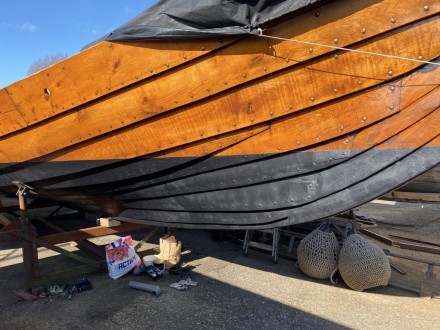
In June 2021, the ship received its name: Dorestat-1. At that time, the operation of the Viking ship also came under the control of the Viking Ship Management Foundation.
Training of skippers began immediately after the launch. This type of ship is not built for maneuvering. In earlier times, this was hardly necessary, and the attached keel makes it even more difficult. It therefore requires great skill from the skippers.
However, a few months later, the first voyage with passengers could be made. Rowing was also performed by an enthusiastic group of enthusiasts. Furthermore, sailing also began much earlier than planned in that same year. With this, the Dorestat-1 demonstrated that it can do what it was built for.
Description
References
- RTV Utrecht
Plank en balk schip gevonden - RTV Utrecht
Graafwerk legt oud scheepsdeel bloot, misschien wel van vikingschip - Brouwers, W. , Jansma, E. Manders, M.
Middeleeuwse scheepsresten in Nederland, de vroege middeleeuwen 500-1050 - vikingschipdorestat.nl