History
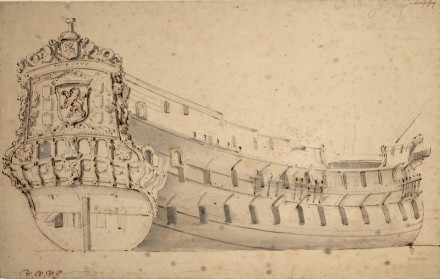
The Wassenaar was a Dutch ship of the line with 56 cannon. It was named after admiral Jacob Wassenaar Obdam who died in the Battle of Lowestoft in 1665.
Anglo-Dutch wars
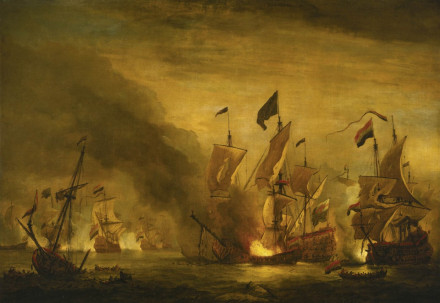
The Wassenaar was active in the Four Day's Battle in June 1666. It sank two English ships and it captured the English Convertine (with 54 cannon). A year later, the ship participated in the famous Raid on Chatham under Michiel de Ruiter.
The Wassenaar also took part in naval battles in the Third Anglo-Dutch War, amongst which was the Battle of Solebay (June 7th, 1672). The Dutch fleet lost five ships then and both sides claimed victory.
Demise
In 1681, the Wassenaar accompanied a convoy of five merchant ships that were underway from the eastern Mediterranean to Barcelona. On January 17th, the Wassenaar beached during a storm at Cala Mesquida on the northeastern coast of the island Menorca. 233 of the crew died, amongst whom captain de Liefde. Only 24 men survived the disaster. Three of the five merchant ships also struck the rocks and were lost.
Remnants of the wreck, including an anchor, are still in place there.
Description
Yard: Admiralty Yard, Rotterdam, master Jan van Leeuwen.
| Master | Liefde, Pieter de |
|---|---|
| People on board | 250 |
| Length | 140 feet (42.7 m) |
| Width | 37 feet (11.3 m) |
References
- Nederlands Instituut Militaire Historie
Wassenaar - Bender J.A. (2014)
Dutch Warships in the Age of Sail 1600 - 1714 p. 236 - Nationaal archief, Den Haag, Staten Generaal
ref. no. 1.01.02, 7078