History
Wreck found during seabed investigations
In 2025, during scans of the seabed for a new district of Copenhagen, Lynetteholm, remnants of a large medieval wreck were found. The archaeologists that were called in soon realised that they had found something very special.
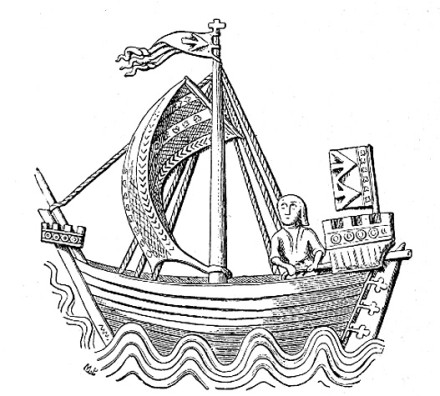
Largest known cog
The wreck is that of an exceptionally large cog, the largest ever discovered. Cogs were the bulk transporters of the Middle Ages and this ship type transformed European trade. This wreck, that has been on the seabed for 600 years, offers new insights into the construction and history of the cog.
“The find is a milestone for maritime archaeology. It is the largest cog we know of, and it gives us a unique opportunity to understand both the construction and life on board the biggest trading ships of the Middle Ages,” says maritime archaeologist and excavation leader, Otto Uldum.
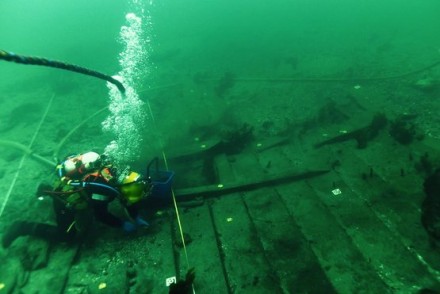
Unique features
The ship was named Svaelget 2 after the channel where it was found and it measures approximately 28 metres long, 9 metres wide and 6 metres high, with an estimated cargo capacity of 300 tons. It was built around 1410 and it represents the largest example of its type ever discovered.
The cog was an efficient ship type, developed in the North Sea region, that could be sailed by a remarkably small crew, even when heavily loaded. These ships were built to make the voyage from what is now the Netherlands and Germany, through the Sound, towards the Baltic. They were the main ship type used by the Hanseatic league, to transport food, salt, wood and other bulk goods.
Built with imported wood
Dendrochronological analysis shows that the ship was built around 1410 using timber from two regions: Pomerania, which is modern-day Poland, and the Netherlands. The planks were made of Pomeranian oak, while the frames came from the Netherlands. This construction pattern suggests that the heavy planking timber was imported, while the frames were cut locally at the building site, reflecting a practical approach and a complex trade network where large quantities of timber moved across Northern Europe
Cargo mystery
One of the big remaining questions concerns the cargo. So far, researchers have found no trace of the cargo, only objects that can be explained as crew belongings or ship’s equipment. The absence of ballast suggests the ship was loaded to the brim with heavy trade goods. One possible explanation it that the cargo, for instance timber or goods in barrels, drifted away.
Description
Wreck measurements:
Length: 28 metres
Width: 9 metres
Height: 6 metres
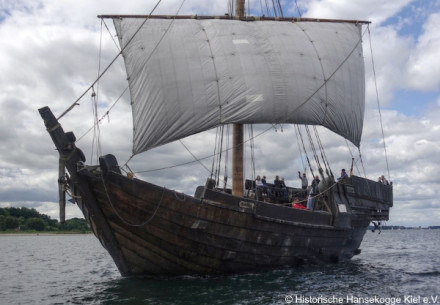
| Tonnage | 300 ton (150 last) |
|---|
Status
Unique preservation state
Svaelget 2 is not only the largest cog ever found; it is also exceptionally well preserved. The wreck was found at a depth of thirteen metres, shielding it from the forces that normally destroy ships near the coast. Because of this protection, the archaeologists found remains that have never been found on wrecks of cogs, such as traces of the ship’s rigging, remnants of the high castles on the bow and stern (never found before on cog wrecks) and remnants of a brick galley.
Otto Uldum remarks on this: “We have plenty of drawings of castles, but they have never been found because usually only the bottom of the ship survives. This time we have the archaeological proof.”
The brick galley was another major surprise. This is the earliest example of its kind from Danish waters. This was where the crew could cook over an open fire. Finds from around the galley and the rest of the ship paint a vivid picture of life on board.
References
- Vikingeskibsmuseet
Archaeologists reveal a medieval super ship: "It's the World’s largest cog" - Arkitema
Lynetteholm - Smithsonian Magazine
Archaeologists Say They’ve Unearthed a Massive Medieval Cargo Ship