History
The *Sint Maria* was a directieschip (a privately funded, state-commissioned warship) from Amsterdam. It was deployed in the North Sea to protect fishing vessels and merchant ships. In the spring of 1652, the ship was chartered by the Admiralty of Amsterdam and attached to the fleet of Lieutenant-Admiral Tromp, with orders to patrol the North Sea and the English Channel.
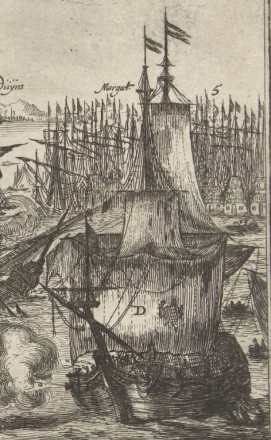
Battle of Dover
On May 29, near Dover, they encountered an English squadron under the command of Admiral Blake. According to an old treaty, Tromp was expected to lower his flag as a gesture of respect. Tromp failed to do so—or did so too late—prompting Blake to fire two warning shots. The third shot was aimed directly at Tromp, who responded with a full broadside. A battle ensued that lasted for five hours. When the two sides disengaged, there was no clear victor.
One Dutch ship, the *Sint Laurens*, was captured by the English.
The *Sint Maria* sustained heavy damage and was seized by the English. Part of the crew, including Captain Sipke Fockes, was taken prisoner. The ship was left in a sinking condition; however, it did not sink and eventually managed to return to the Netherlands.
Captured and Released
On June 2, Captain Sipke Fockes was formally interrogated by the English authorities. Because the formal declaration of war by the English Commonwealth did not occur until July 8, 1652—and negotiations with the Dutch envoys were still ongoing throughout June 1652—the officers and men captured near Dover were released and repatriated shortly after their interrogation.
In the meantime, the First Anglo-Dutch War had truly begun. Sipke Fockes returned to the service of the Amsterdam Admiralty and, later that year—in December 1652—took part in the Battle of the Downs. Once again, he was aboard the repaired Sint Maria.
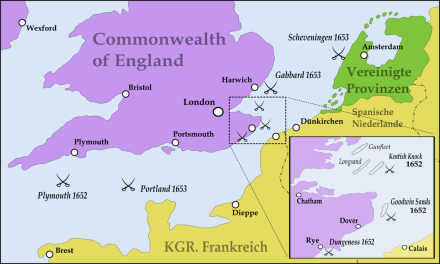
Final battle
The Three Days' Battle* was a repeat of the Battle of Dover. The Dutch fleet was escorting a large group of merchant ships through the English Channel. Off the coast of Portland, they encountered the English fleet under Blake. Tromp attempted to protect the merchant ships while engaged in combat.
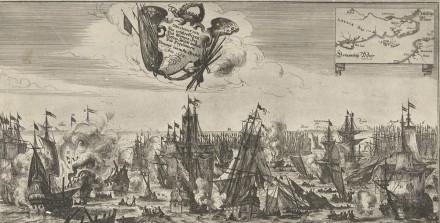
The 'Sint Maria' was also present during the Three Days' Battle, assigned to Admiral Tromp’s squadron. During this engagement, Fockes was killed, and the 'Sint Maria'—heavily damaged—was taken away by the English.
A document received from Texel on April 7, 1653, lists nine Amsterdam *directieschepen* (privately funded warships) that were, by that time, once again ready to set sail. One ship had failed to return. In place of the *Sint Maria*, a new vessel, *De Pelikaan*, was chartered. (SG, inv. 5554)
A document received from Texel on April 7, 1653, lists nine Amsterdam *directieschepen* that were, by that time, once again ready to set sail. One ship had failed to return. In place of the *Sint Maria*, a new vessel, *De Pelikaan*, had to be chartered. (SG, inv.5554,)
*) The Three Days' Battle (February 28 – March 2, 1653) was not a conflict confined to a single fixed location, but rather an ongoing naval engagement that spanned more than 250 kilometers across the English Channel, moving from southwest to northeast.
Description
| Master | Fockesz, Sipke |
|---|
References
- HTR Hub [htrhub.dekok.xyz
Staten generaal ingekomen brieven - HTR Hub [htrhub.dekok.xyz
SG, inv. 5553, scan 267