History
Oldest Mediterranean shipwreck?
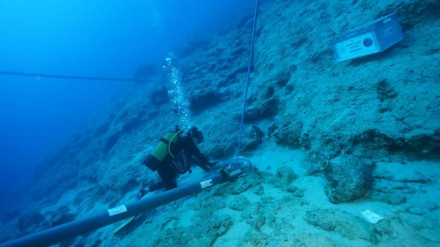
In 2024, archaeologists of the Turkish Akdeniz University found the remains of a shipwreck near the island of Kekova in Turkey at a depth of 30 meters. Even though no remnants of the ship itself have been preserved, the researchers found amphorae of possibly 4,700 years old, placing the find in the Early Bronze Age and possibly making it to the oldest shipwreck found in the Mediterranean. The discovery was disclosed in 2026.
Early Mediterranean trade
The research was led by underwater archaeologist Hakan Öniz. The cargo, mainly consisting of amphorae, provides insight in the trade routes of of this very early period. Analysis of the clay of the amphorae shows that they were made in the Jordan Valley. Similar amphorae have been found in Egypt, Troy and Crete, showing that trade routes for food existed long before the trade systems of the Late Bronze Age arose. The researched amphorae are quite different, which could indicate that they were used for different products.
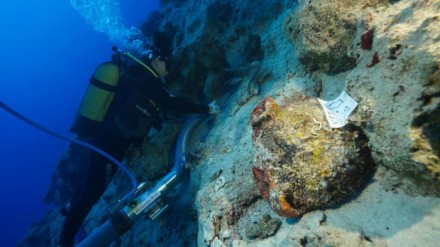
One of the found amphorae has several markings and two holes. The researchers think that it was possibly used as a churning vessel for butter or cheese. If this can be proven, it shows that the crew prepared food during the voyage, which in turn can point to the fact that they made longer voyages.
Stone anchors
The only objects that could really be associated with the ship itself are three stone anchors that were found in the vicinity. Two of them have three holes and one of them has one single hole. Yet the archaeologists have not managed to determine whether these stones belonged to the ship. The anchors are similar to stone anchors from other Bronze Age finds from the east of the Mediterranean.
Further research can yield more information, but based on what has been found so far, the researchers suggest that it concerns a small ship that sank while traveling across the Mediterranean from east to west.
Description
Status
This discovery significantly pushes back the archaeological evidence for organised Mediterranean trade compared to other discoveries, like the Uluburun wreck. The research continues under Hakan Öniz.
References
- Öniz, H. & Öztosun, C. (2026)
Preliminary Report on the Early Bronze Age Shipwreck in the Kekova Region of Antalya
Journal of Maritime Archaeology - Arkeo news
A 4,700-Year-Old Shipwreck, Nine Mysterious Marks, and an Unexpected Clue to Life at Sea