History
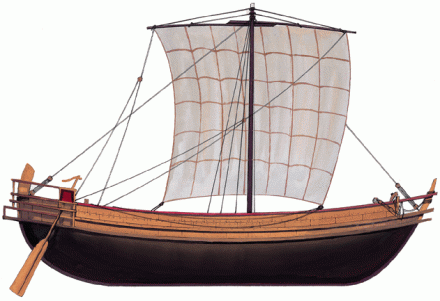
Roman merchantman
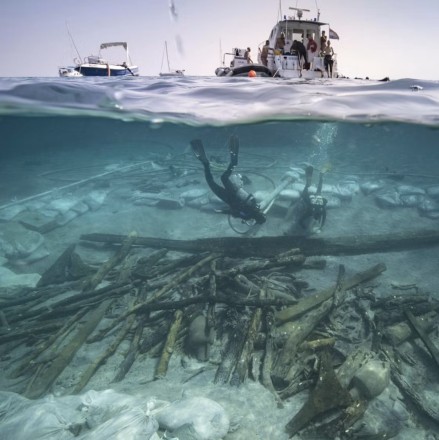
The Ilovik–Paržine 1 wreck has been named after the Croatian island of Ilovik. It was first discovered in 2016 and excavated over several seasons. Lying just four meters below the surface of the water, the site preserved fragments of amphorae, ballast stones, and sections of the wooden hull.
Dating and provenance
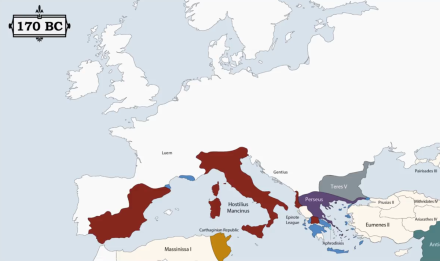
Radiocarbon dating and cargo analysis confirmed its age at around 170 BCE, placing it firmly within the Roman Republic period—a time of expanding maritime trade across the Mediterranean.
Earlier research had confirmed Brundisium (Brindisi) in Southern Italy as the place where the ship was built. The ballast stones in the wreck indicate this.
Description
Status
Protection of the hull
The wooden hull of a ship has to withstand a lot: salt water, microorganisms and aquatic animals could slowly affect a ship. Because of this, ship builders in antiquity coated the ships with protective layers.
New research into the Roman wreck Ilovik–Paržine 1 shows that a layer like that can reveal much more then just how a ship was waterproofed. The coating also tells things about repairs that were undertaken and possibly even where the ship sailed. Over the years, several coats were applied during repair works.
Pollen
Much can be told about where the ship has sailed and where it was repaired on account of the pollen that were enclosed in the protective cover. The enclosed pollen are from plants from several areas in the Adriatic Sea and Southern Italy.
"In the past, archaeologists did not concern themselves much with the organic materials that waterproofed a ship," says chief researcher Armelle Charrié of the University of Strasbourg. "Yet still they were indispensable for shipping at sea and on rivers. They are true witnesses of early maritime technique."
This study highlights a shift in archaeological research. Instead of focusing solely on visible structures wood and cargo, scientists are now extracting information from microscopic and chemical traces.
Coating
In the case of Ilovik–Paržine 1, researchers found that the hull had been coated both inside and out with a thick organic layer.
Chemical analysis revealed that the primary ingredient was pine-derived pitch, produced by heating conifer wood under low-oxygen conditions. This process creates a sticky, water-resistant substance that has been used in shipbuilding for millennia.
By integrating molecular science with environmental data, researchers can reconstruct trade routes, technological choices, and even cultural exchanges.
Beeswax
For example, the presence of beeswax in one sample may reflect influence from Greek shipbuilding traditions, which were well established in Southern Italy during the Roman Republic.
In other words, the ship’s coating is not just a technical feature—it is evidence of knowledge transfer across ancient maritime networks.
A New Frontier in Maritime Archaeology
The Ilovik–Paržine 1 study demonstrates how interdisciplinary science is reshaping our understanding of the past.
Traditional archaeology might identify a ship’s origin and cargo. But this approach goes further-revealing how the ship was built, maintained, and adapted over time.
It turns a static wreck into a dynamic object with a life history. And in doing so, it reminds us that even something as simple as a layer of tar can carry the imprint of ancient innovation, trade, and survival at sea.
References
- Charrie-Duhaut A, Couillebault Q, Miholjek I and Boetto G (2026)
Adhesive coatings in naval archaeology: molecular and palynological investigations on materials from the Roman Republican wreck Ilovik–Paržine 1 (Croatia)
Frontiers in Materials
pp 13:1758862 - Roeline Bos
Nieuw onderzoek naar stuifmeel in wrak