History
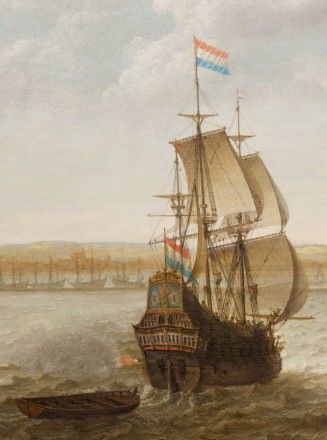
The *Gelderland* was a large ship in the service of the West India Company; it was part of the first major WIC fleet dispatched to capture the Portuguese city of San Salvador da Bahia in Brazil in 1624. In 1634, while returning from the West Indies, the *Gelderland* was captured by Dunkirk privateers near the Vrouwe Zand.
Bahia 1624
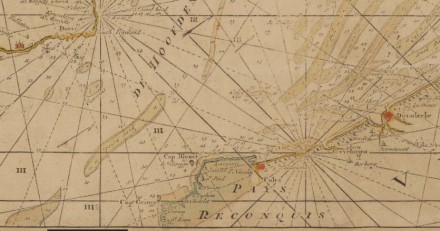
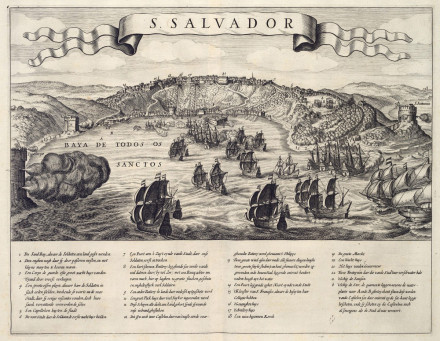
The ship played a significant role in the capture of San Salvador in the Bahia de Todos os Santos (Bay of All Saints) on May 10, 1624.
Under the command of Vice-Admiral Piet Hein, the *Gelderland* sailed—alongside the *Groeningen* and the *Nassau*—to a position right next to the city's gun batteries. These were captured, marking a pivotal moment in the conquest of the city.
Robbery
At the end of 1633, the Gelderland left for the Netherlands together with New Netherlands. The trip went smoothly.Once in the Channel they were shortly followed by 1 Dunkirk privateer who dropped out. The Gelderland seemed too strong for 1 privateer. Yet, just to be on the safe side, everything was prepared to defend themselves. A few hours later near Dover the lookout saw 17 sails on the horizon. These princes had flags (of the Republic) flying at the top and therefore had to be friends. The Gelderlander sailed on and the ships came closer. When they came close, the 17 ships exchanged their prince's flag for the Burgundian (Spanish). The admiral ship boarded the Gelderlander at the bow. No cannon could be fired for defense.
THE enemy jumped en masse and a fight broke out. The crew was overwhelmed and forced back to the stern. The Dunkirk privateer summoned skipper Hendrick Sievertsz. to surrender. He refused for the time being, but eventually had to surrender his ship. He did not do that.
This happened near Vrouwen Zand. THE witnesses who were heard later stated that they would have stood their ground if the Nieuw Nederland had not taken off. (attestatie 16-4-1634)
Description
Built: yard, Amsterdam, before 1623
Owner: WIC chamber Amsterdam
Tonnage: 300 last
Master: Gerrit Douwens (1623) Pieter Gerritsz Root (1628)
Armament: 4 bronze cannon , 28 iron cannon