History
In July 2025, a Roman wreck was discovered during routine surveys of the seabed off the southern Italian coast near Gallipoli. The exceptional discovery has been kept secret until now (3-2-2026).
The newly revealed shipwreck identified as a large navis oneraria, a Roman commercial vessel used for long-distance maritime trade. Resting on the seabed at considerable depth off the Gallipoli coastline, the ship is described as being exceptionally well preserved.
Garum
What makes the discovery particularly significant is the nature of the cargo: amphorae filled with garum, the fermented fish sauce that was one of the most prized and expensive commodities of the Roman world. Garum was not only a staple of Roman cuisine but also a luxury product, traded across the empire from Hispania to Gaul and beyond. The arrangement of the amphorae on the seabed traces the original outline of the vessel.
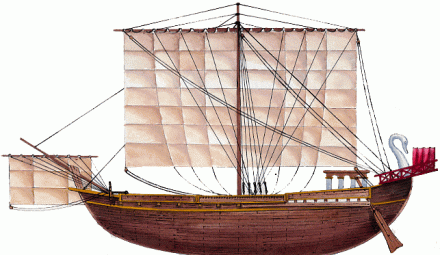
Description
Container ship of the Romans; Navis Onaria
It is generally believed that in the maritime field, container ships date from the 1950s. However, the concept of boarding food of all kinds, liquid and solid in identical terracotta jars (amphora), standardized to the extreme, is a very old practice. Certainly an amphora is more modest than a modern container, but still well suited to storage in the merchant ships of the time.
The Navis Oneraria was the standard cargo freighter in Roman times. It is even in some respects a generic term that intersects sub-variants, like Corbita, cargo of heavy wheat.
Status
According to the Ministry of Culture, secrecy was essential in the months following the discovery. Underwater archaeological sites are especially vulnerable to illegal salvage, and the presence of a cargo as valuable as (garum) amphorae posed a high risk of looting.
The Ministry of Culture has announced that the discovery will now be followed by systematic documentation, advanced underwater surveys, and the planning of future excavation and conservation activities. These efforts aim not only to protect the wreck but also to make its historical value accessible through research, exhibitions, and public communication.