History
The SS Rotterdam was the first ship of the company Plate, Reuchlin & Co., founded in 1871 with the aim of creating a direct connection with America. In 1873, Plate, Reuchlin & Co. was converted into the NV Nederlandsch-Amerikaansche Stoomvaart-Maatschappij (NASM). Predecessor of the Holland America Line (HAL)
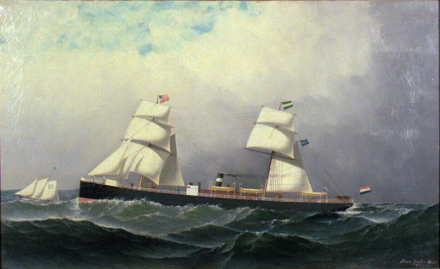
The transatlantic connection between Rotterdam and New York existed from 1873 to 1978 and played a major role in the migrations from Europe to America.
Last voyage
On her 65th voyage from New York to Rotterdam, the SS Rotterdam ran aground on the southwestern tip of the Zeehondenplaat (Banjaard) near Schouwen on the morning of September 26, 1883, at 10:30 a.m. in foggy weather, a stiff breeze, and rough seas.
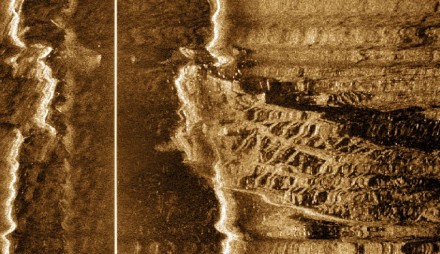
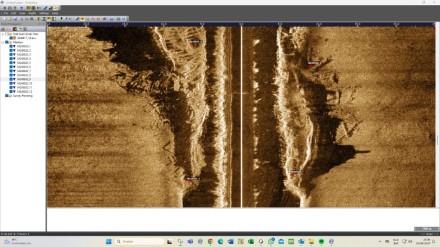
The 56 passengers and 45 crew members were all able to reach land safely, and the cargo could also be unloaded later. The ship initially remained stranded on the sandbank, but due to bad weather conditions (high waves and storm), it broke in two on October 12, 1883, due to the force of the waves pounding against the sandbank. The wreck was eventually cleared using dynamite in 1903 and 1907.
Johan George Reuchlin, founder and director of HAL, was one of the three Dutch people on the Titanic that sank on April 15, 1912. Reuchlin, who sailed at the invitation of the White Star Line management, did not survive the disaster.
Description
Built: Henderson, Coulborn & Co., Renfrew, UK, 1872
2 decks.
She had a four-cylinder quadruple expansion engine driving a single screw propeller but she could also use her ten sails for propulsion. The engine was rated at 1,300 indicated horsepower (970 kW).[
| Length | 268 ¼ feet (81.8 m) |
|---|---|
| Width | 35 feet (10.7 m) |
| Tonnage | 1735 ton |
Status
References
- marhisdata id 8332
- Nehallenia Archeologisch Duikteam
Nehallenia Archeologisch Duikteam