History
The Mljet ship is an Byzantine-era ship discovered more than a decade ago on the seabed off Croatia's southern coast.
The shipwreck could be dated to the 7th or 8th century and that the artefacts on board indicated that this was no ordinary merchant vessel.
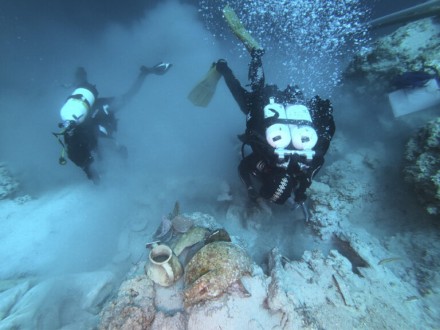
Beyond the predictable objects like amphorae, anchors and cooking implements, the team recovered a collection of exquisite masculine jewelry—gold buckles, pendants, belt strap ends, and a gold signet ring they believe bears the likeness of Emperor Heraclius, who ruled Byzantium from 610 to 641
a collection that appears to have been the property of a wealthy and well-connected person aboard the ship. Who was he? Where was he headed, and for what purpose?
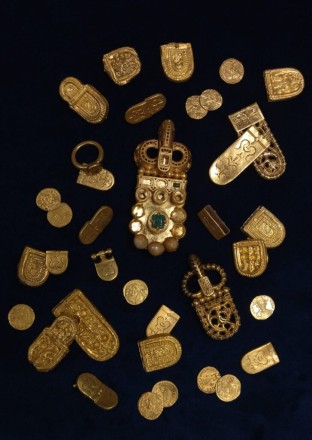
"This is an impressive amount of gold, the largest ever found on a shipwreck in the entire Mediterranean," said Igor Miholjek, the head of research at the Croatian Conservation Institute. "It weighs over 600 grams when weighed after cleaning and restoration."
Dating
The coins recovered from the wreck date from the reigns of four emperors of the Heraclid dynasty. This places them at the end of the 7th century or the beginning of the 8th century.
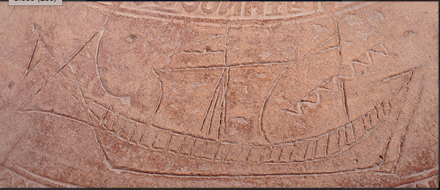
A byzantine ship, graffiti on a amphora sherd
Rather than relying solely on pottery styles or ship construction techniques, archaeologists can use the coins to narrow the timeframe of the ship’s final voyage with much greater confidence.
Polače
Archaeologists believe the ship was attempting to reach the sheltered Bay of Polače when disaster struck. The bay has served as a safe natural harbour since Late Antiquity. Protected from strong winds and rough seas, it offered shelter to countless vessels seeking refuge during storms. Nearby stood an impressive late Roman palace complex, highlighting the bay’s importance as a secure anchorage and maritime centre for centuries
Description
Status
After a decade of painstaking progress, Miholjek and his team have uncovered something more astonishing than they could have ever imagined: a rich trove of artifacts that has not only opened a valuable window into travel and trade in the Adriatic at a time when written records were nearly blank.