History
In the spring of 1633, Cornelis Jansz. de Haan patrolled the English Channel and the North Sea aboard the Amsterdam directieschip (privately funded naval vessel) Het Haantje to protect Dutch merchant shipping against privateers from Dunkirk.
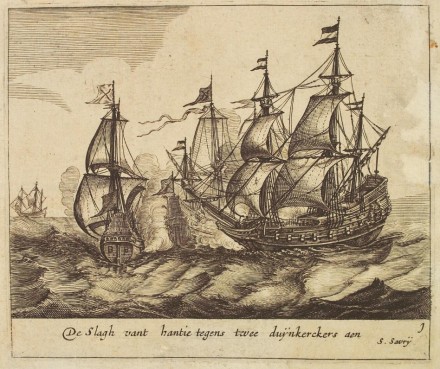
Dunkirk privateers had become a veritable scourge. To combat the Dunkirk privateers more effectively, so-called 'directieschepen' were commissioned using private funds.
De Haen entered the service of the Amsterdam Chamber. His effective command at sea earned him the nickname 't Haentje (The Little Rooster).
On April 19, he was surprised near the Strait of Dover by two heavily armed privateers from Dunkirk. Instead of fleeing or striking his colors, De Haan chose to fight to the bitter end.
The Dunkirkers positioned themselves on either side of *Het Haantje* and subjected the ship to heavy broadsides. After the rigging and deck had been shattered by gunfire, the privateers made several attempts to board. De Haan’s crew managed to repeatedly repel the boarding parties.
Captain Cornelis Janszoon de Haan was mortally wounded during the intense bombardment but refused to order a surrender. Although the crew fought on until their ammunition was nearly exhausted and the ship was battered beyond repair, the vessel was ultimately boarded and captured by the Dunkirkers. The surviving crew members were taken prisoner and transported to Dunkirk.
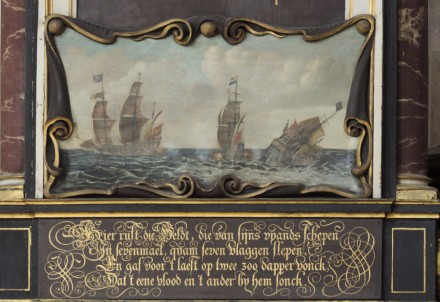
Captain De Haan’s courageous resistance against a force twice the size of his own made a deep impression in the Republic. His conduct was cited as a shining example of steadfastness.
The ship (or what remained of it) was taken in tow by the privateers to Dunkirk. There, it was declared official "booty" (prize) by the Spanish Admiralty Council (*Amirauté de Dunkerque*). Heavily damaged ships in Dunkirk were generally broken up for usable timber and cannons.
Although the ship was lost, the Republic later secured the safety of the surviving crew members through a prisoner exchange. Captain De Haen’s body was brought back to the Republic and accorded an honorable state burial in the Oude Kerk in Amsterdam.
Description
| Master | Cornelis Jansz. de Haan |
|---|
References
- Kok J, (1788)
Vaderlandsch woordenboek. Deel 19
pp 16