History
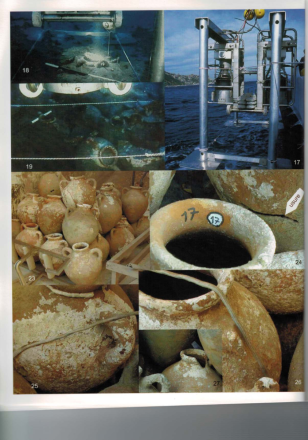
An Etruscan cargo ship was discovered near the small island of Grand Ribaud in 1999. On board were 1,000 amphorae, some of which contained wine. The ship likely originated from the important Etruscan port city of Caere, north of Rome. During this period, the Etruscans still dominated large parts of Italy; At that time, Rome was still a small Etruscan provincial town.
Wine export
The wine was intended for export to Gaul. The Celts in present-day France were major consumers of Etruscan wine during that era.
Lattes, in southern France, was an important Etruscan port. It was likely founded as an Etruscan *emporion* (trading settlement) specifically for the wine trade. The distinctive Etruscan wine amphorae found in large numbers on the ship are also frequently found at Lattes. Wine consumption and culture spread from Lattes deep into the Celtic hinterland.
Cargo
The Grand Ribaud vessel was an Etruscan cargo ship. Its cargo consisted almost exclusively of Etruscan wine amphorae (over 1,000 of them). To date, it remains the only well-documented Etruscan ship from antiquity.
Description
Status
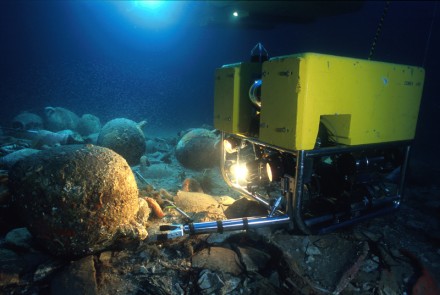
Between 2000 and 2003 the DRASSM team worked on the wreck to develop new recording methods using digital photogrammetry. They could rely on Comex’s support, in particular the use of its Rémora 2000 submersible and the ROV Achille. These excavations 60 m below the sea have given underwater archaeologists a greater operating range and pave the way for the development of deep-water archaeology.
References
- archeologie.culture.gouv.fr
Grand Ribaud - LONG Luc, GANTÈS Lucien-François, DRAP Pierre (2002)
Premiers résultats sur l'épave profonde Grand Ribaud F (Giens, Var). Quelques éléments nouveaux sur le commerce Etrusque en Gaule, vers 500 av. J.C..
Cahiers d'Archéologie Subaquatique, 14
pp 5-40